How to build an emergency kit on a budget
Getting prepared shouldn't cost a fortune. Free steps first, then what you already own, then a prioritised list of what to buy, a little at a time.
Start with the free steps, such as a plan, contacts and knowing how to turn off your utilities, then gather what you already own, and buy the rest gradually: water, long-life food you already eat, a torch, batteries and a radio first.
Emergency kits are often sold as expensive bundles. You don't need one. Most of what matters costs nothing, much of the rest is already in your home, and the few things you do need to buy can be spread over a few weeks of normal shopping.
Free preparation steps
These cost nothing and make the biggest difference:
- Make a household plan: who does what, how you'll contact each other and where you'll meet.
- Write down emergency contacts on paper, as well as in your phone.
- Find out how to turn off your water, gas and electricity.
- Sign up for local alerts and know where to get official updates.
- Check on neighbours who might need help, and agree to look out for each other.
- Photograph important documents and keep the copies somewhere safe.
Use what you already own
Before buying anything, gather what you have: torches, batteries, a first aid kit, blankets, warm clothes, a radio, a power bank, water bottles and the food in your cupboards. Put it together in one place so you know what's missing.
Your first purchases
When you do buy, buy in this order, because it covers the most important needs first:
- Drinking water. For two adults for three days, that's 18 L. Refilling clean containers from the tap costs very little.
- Long-life food you already eat, added a few items at a time to your normal shop.
- A torch and spare batteries.
- A battery or wind-up radio.
- A manual tin opener, if you don't have one.
- Basic first aid supplies and a supply of any regular medication.
- Hygiene items: hand sanitiser, wipes and bin bags.
A little each week
Spread it over a few weeks: one or two items with each shop. There's no need to buy everything at once, and buying food you already eat means none of it is wasted.
Ways to spend less
- Refill rather than buy. Clean, food-grade containers filled from the tap cost far less than bottled water.
- Buy what's on offer, but only the things you already eat.
- Share with neighbours or family. Split a multipack, or agree to look out for each other rather than both buying the same equipment.
- Borrow before you buy anything you'd rarely use.
- Choose a wind-up or solar radio or torch if you'd rather not keep buying batteries.
- Keep receipts and check dates so nothing is wasted.
What not to spend money on
Ready-made "survival" bundles often include items you already have, food your household won't eat, and equipment you don't need. Specialist long-life ration packs are rarely necessary for a few days at home. Expensive gadgets are less useful than a plan, a torch, a radio and enough water. Spend on the basics first, and only add more once those are covered and you know you'll use it.
Avoid waste
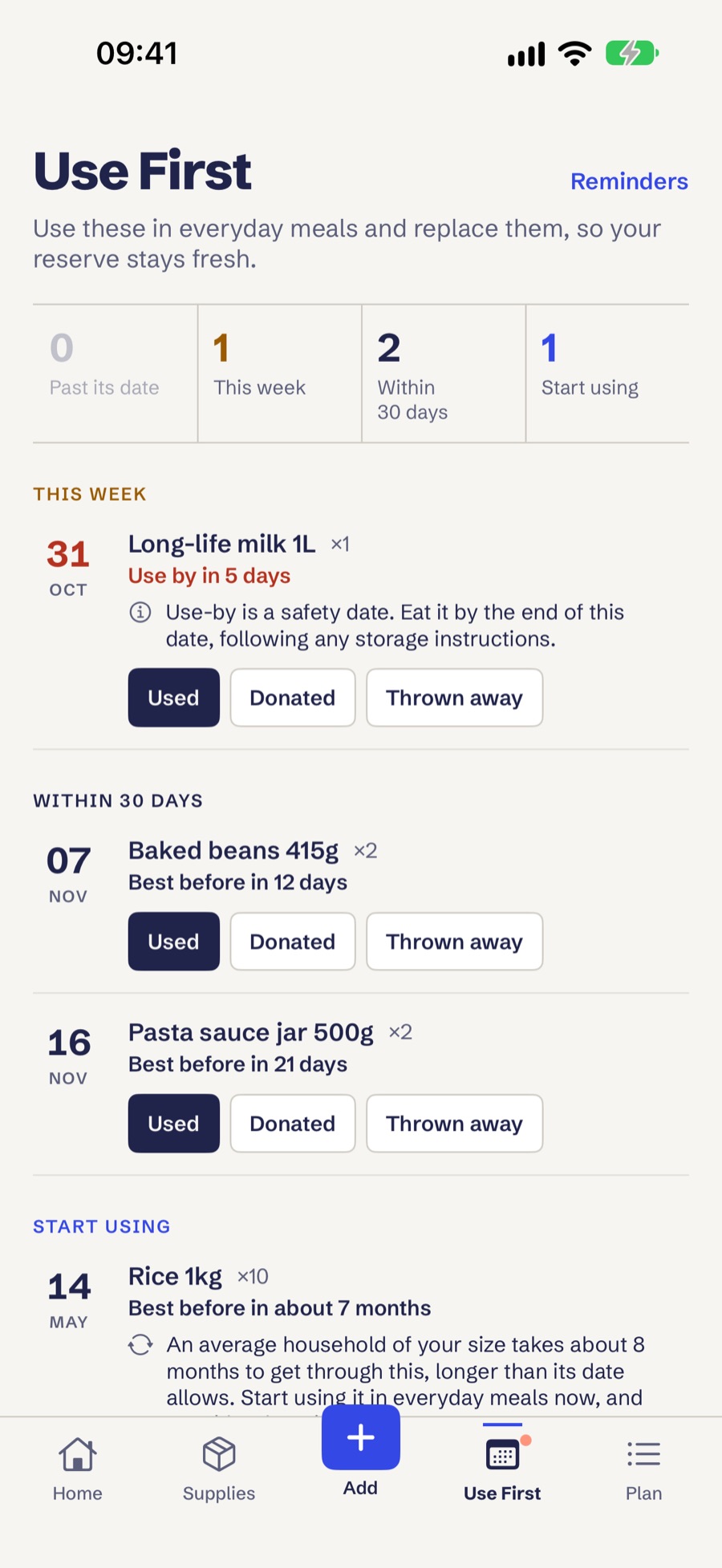
The most expensive kit is one that gets thrown away. Avoid unfamiliar "survival" food nobody will eat, gadgets you don't need, and bulk buys you don't have room for. Use the oldest food in normal meals and replace it, so your kit pays for itself.
Maintain your kit
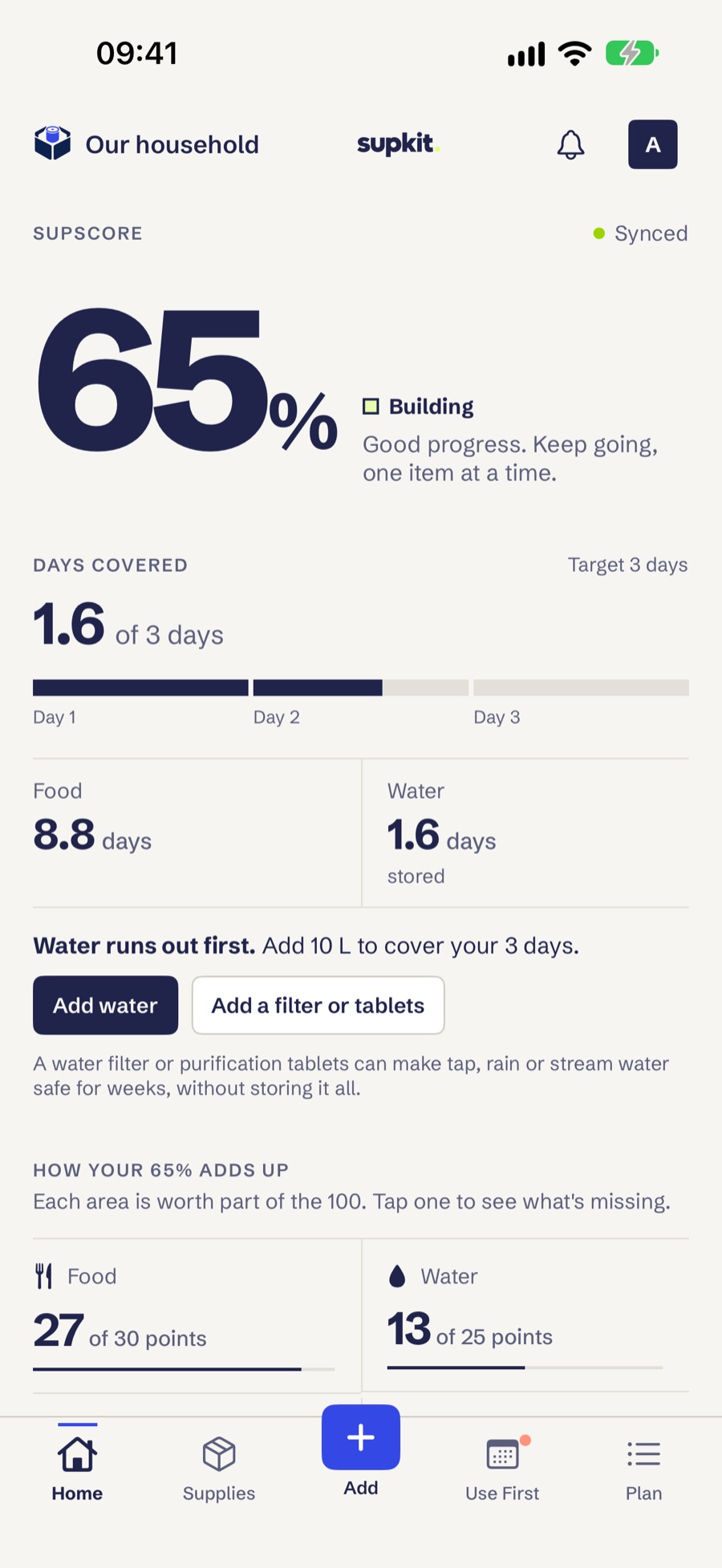
Check it every few months, replace anything you've used, and keep an eye on dates. SupKit tracks what you have and reminds you before anything goes out of date, so nothing is wasted.
Questions
How can I make an emergency kit cheaply?
Start with free steps like a plan and contact list, gather what you already own, then buy the essentials gradually with your normal shopping: water, long-life food you eat, a torch, batteries and a radio first.
What should I buy first for an emergency kit?
Drinking water, long-life food your household eats, a torch and spare batteries, a radio and a manual tin opener.
Do I need to buy an emergency kit all at once?
No. Building it gradually over a few weeks spreads the cost and avoids waste.
Sources
- Be ready for emergencies, UK Government (Cabinet Office) Be Ready campaign. Checked 28 October 2026. Contains public sector information licensed under the Open Government Licence v3.0.
- Home food fact checker, Food Standards Agency. Checked 29 October 2026.
- SupKit planning rules (SupScore 2026.5), SupKit. SupKit's own planning data.
We summarise official guidance in our own words. Always follow advice from your local authorities.