How to organise emergency food storage at home
A simple system for storing emergency food at home: where to keep it, how to group and label it, and how to always know what you've got.
Pick a cool, dry, dark spot away from pests and chemicals, group food by type, put the newest at the back and the oldest at the front, label boxes clearly, and keep a list of what you have and when it goes out of date.
A cupboard of emergency food is only useful if you know what's in it. The commonest problem isn't too little food; it's food that's hidden, forgotten and out of date by the time anyone looks. A simple system fixes that, and it takes an afternoon to set up.
Assess your space
Start by finding the best place, not the biggest. Food keeps best somewhere cool, dry and dark, with a steady temperature. Kitchen cupboards away from the oven and dishwasher, a pantry, or a cupboard in a cool room usually work well.
Be careful with garages, sheds, lofts and spaces next to boilers. They can get too hot in summer, too cold in winter, or damp, and they're more open to pests. Some tins and jars will be fine there; flour, oats, cereals and anything in thin packaging usually won't be.
Keep food well away from cleaning products, paint, fuel and garden chemicals.
Group your items
Group like with like so you can see gaps at a glance:
- Staples: rice, pasta, oats, crackers.
- Protein: tinned fish, beans, pulses, peanut butter.
- Fruit and vegetables: tinned fruit and vegetables, dried fruit.
- Drinks: long-life milk and juice.
- Snacks and treats: cereal bars, dried fruit and nuts.
- Special diets and baby food: kept separate so they're never used by mistake.
Choose containers
Clear, stackable containers with lids keep pests out and let you see what's inside. Sturdy boxes work well for tins. Keep food in its original packaging where you can, so the date, allergens and storage instructions stay with it.
Think about weight. A box full of tins is heavy, so keep heavy boxes low, on strong shelves, and never somewhere they could fall or block a way out of the house.
Label everything
Label each box with what's in it and the earliest date inside. A thick marker and masking tape is enough. If you decant anything into another container, write the product name, the date and any allergens on it.
Organise by date
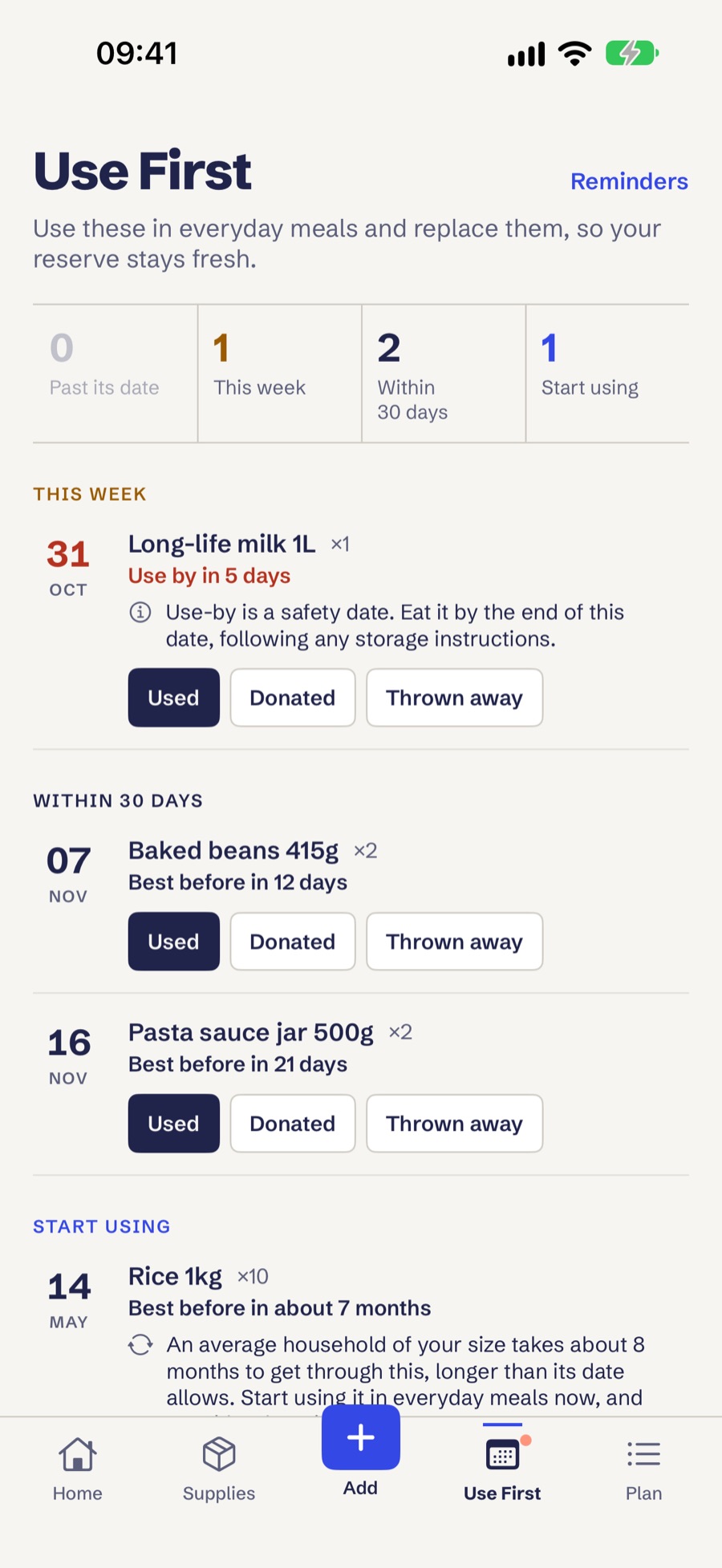
Put the newest food at the back and the oldest at the front, so the next one you reach for is the one that needs using first. When you unpack shopping, move older items forward before adding new ones behind.
Keep a digital inventory
A list stops you buying things you already have and tells you what's due. It can be a note on your phone or a spreadsheet, but it needs updating every time something is used or added, which is where most lists fail.
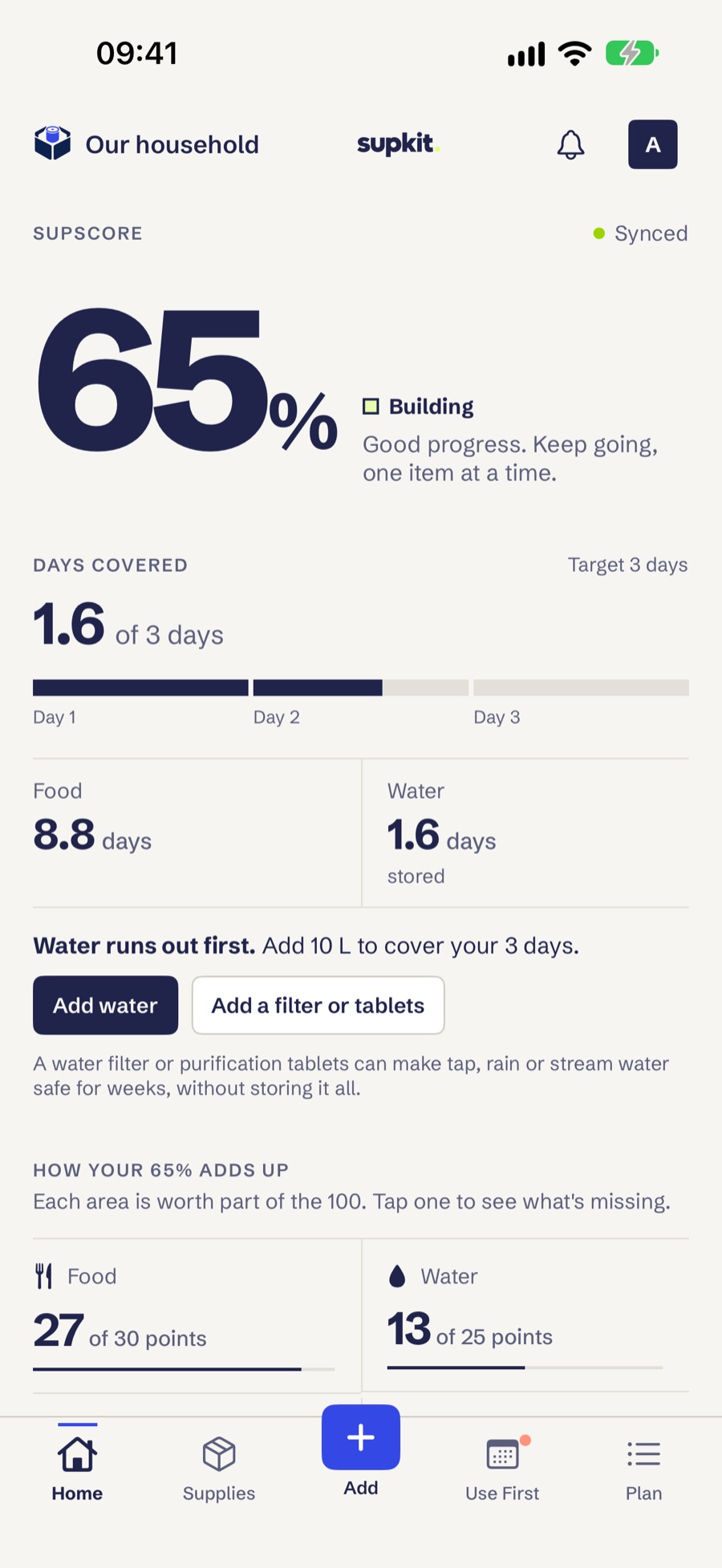
SupKit was built for this: scan a barcode or speak an item, and it keeps the list, tracks every date, tells you what to use first and adds replacements to your shopping list. Everyone at home sees the same list.
Maintenance
- Check your store every month or two, and after any disruption.
- Use anything near its date in normal meals and replace it.
- Throw away damaged tins and anything that shows signs of spoilage or pests.
- Wipe shelves and check for damp.
Questions
Where is the best place to store emergency food?
Somewhere cool, dry and dark with a steady temperature, away from heat sources, damp, pests and household chemicals. Garages and lofts can be too hot, cold or damp for many foods.
How should I organise a food stockpile?
Group food by type, keep it in labelled, lidded containers, put the newest at the back and the oldest at the front, and keep a list of what you have and when it's due.
Can I store emergency food in the garage?
Some tins and jars may be fine, but garages often get too hot, cold or damp and are more open to pests. Check the storage instructions on each product.
Sources
- Food safety in an emergency, Food Standards Australia New Zealand. Checked 29 October 2026.
- Floods and food safety, Food Standards Australia New Zealand. Checked 29 October 2026.
- Use-by and best-before dates, Food Standards Australia New Zealand. Checked 28 October 2026.
- Food safety after an emergency or natural disaster, Queensland Health (qld.gov.au). Checked 29 October 2026.
We summarise official guidance in our own words. Always follow advice from your local authorities.