How to build a 3-month food supply without wasting money
A realistic, phased plan for building a larger food reserve from the food you already eat, without panic buying or throwing food away.
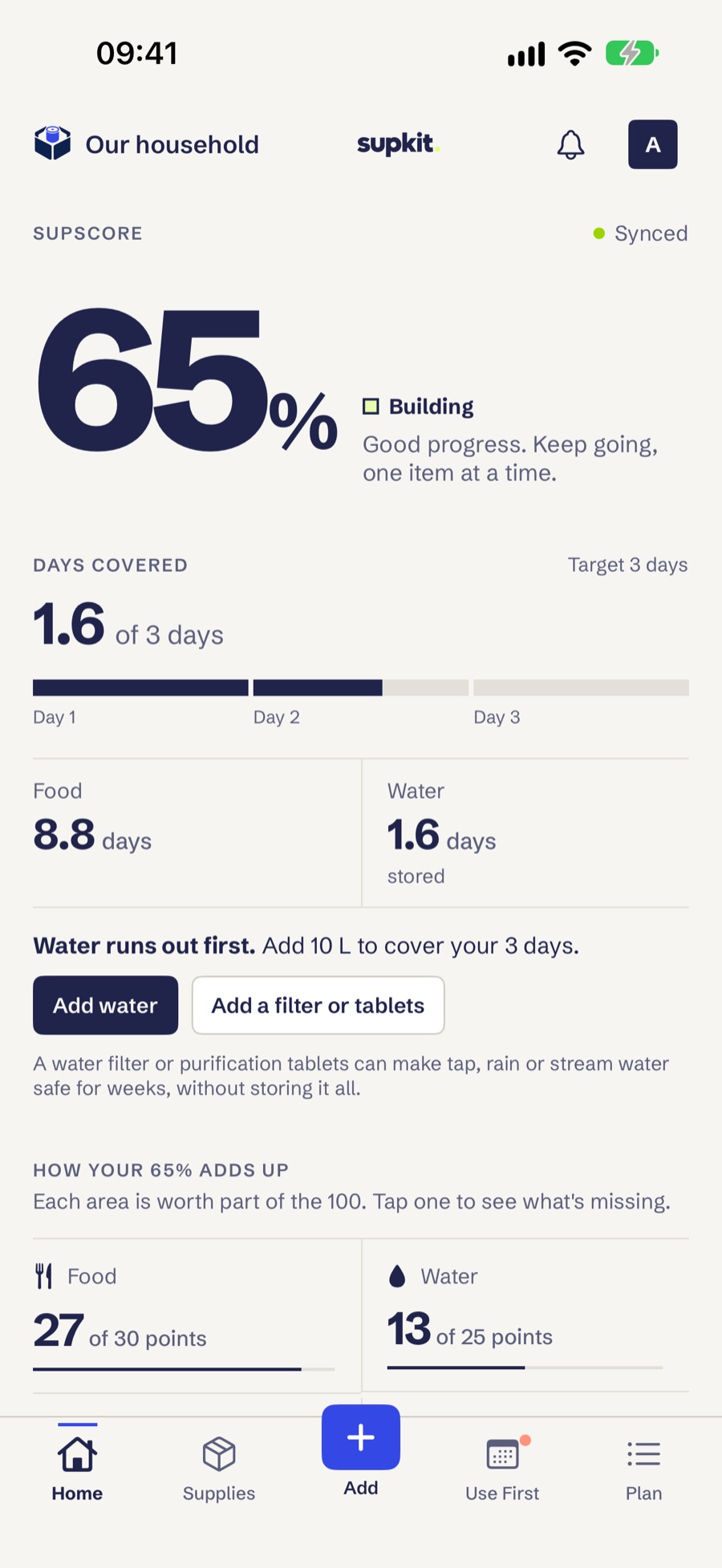
Build it in stages: cover a few days first, then a week or two, then grow towards three months by adding a little to your normal shopping. Store food you already eat, and use the oldest first so nothing goes to waste. For two adults, three months is about 405,000 calories in SupKit's planning figures.
A three-month food supply sounds like a lot, and it is. It isn't something official guidance asks every household to have. Most guidance starts with a few days. Some households still want a larger reserve, perhaps because they live somewhere remote, have been through a long disruption, or simply like knowing the pantry are full.
The good news is that a large reserve doesn't need a large bill or a garage full of buckets. Built slowly from food you already eat, it costs little more than your normal shopping and wastes almost nothing.
Set a realistic target
Start with what official guidance in the US recommends, and treat anything beyond that as your own choice:
A sensible path is three stages:
- A few days. The official starting point, and the one that matters most.
- A week or two. Enough for a longer disruption or a period of illness at home.
- Up to three months. Only if it suits your home, your budget and your space.
For a sense of scale, here's what each stage means in food energy for common households, in SupKit's planning figures:
| Household | 3 days | 7 days | 14 days |
|---|---|---|---|
| One adult | 6,750 calories | 15,750 calories | 31,500 calories |
| Two adults | 13,500 calories | 31,500 calories | 63,000 calories |
| Two adults and two children | 23,100 calories | 53,900 calories | 107,800 calories |
| Two adults, a teenager and two children | 30,300 calories | 70,700 calories | 141,400 calories |
Food energy at SupKit's planning figures by age. SupKit estimate
Three months for two adults is about 405,000 calories. That number is why the reserve has to be built gradually, and why it has to be food you'll actually eat.
Audit what you already have
Before buying anything, look in the pantry. Most homes already hold several days of food. Note what you have, what you eat every week, and what has been sitting at the back for too long. Anything near its date goes into this week's meals.
The first month
Add a little extra to each normal shop: one more of the long-life foods you already buy. Within a few weeks you'll have a week or two of food without a noticeable change in what you spend.
- Favor food that keeps without a fridge and that your household likes.
- Cover the basics: staples, protein, fruit and vegetables, and a few treats.
- Plan around allergies and dietary needs from the start.
Building towards 90 days
Keep the same habit going, and widen the range so meals don't get repetitive. Buy when things you already use are on offer, rather than stocking up on unfamiliar products. Check how much space you have before each big shop; a reserve that doesn't fit becomes a reserve that gets forgotten.
The best foods to stockpile lists long-life foods with their allergens and diets, and the food quantity calculator turns a target into packs.
Storage
A larger reserve needs a proper home: somewhere cool, dry, dark and away from pests and household chemicals. Garages and lofts can get too hot, too cold or too damp for some foods, so check before you use them. The food storage guide has a system you can copy.
Rotation: the step that saves money
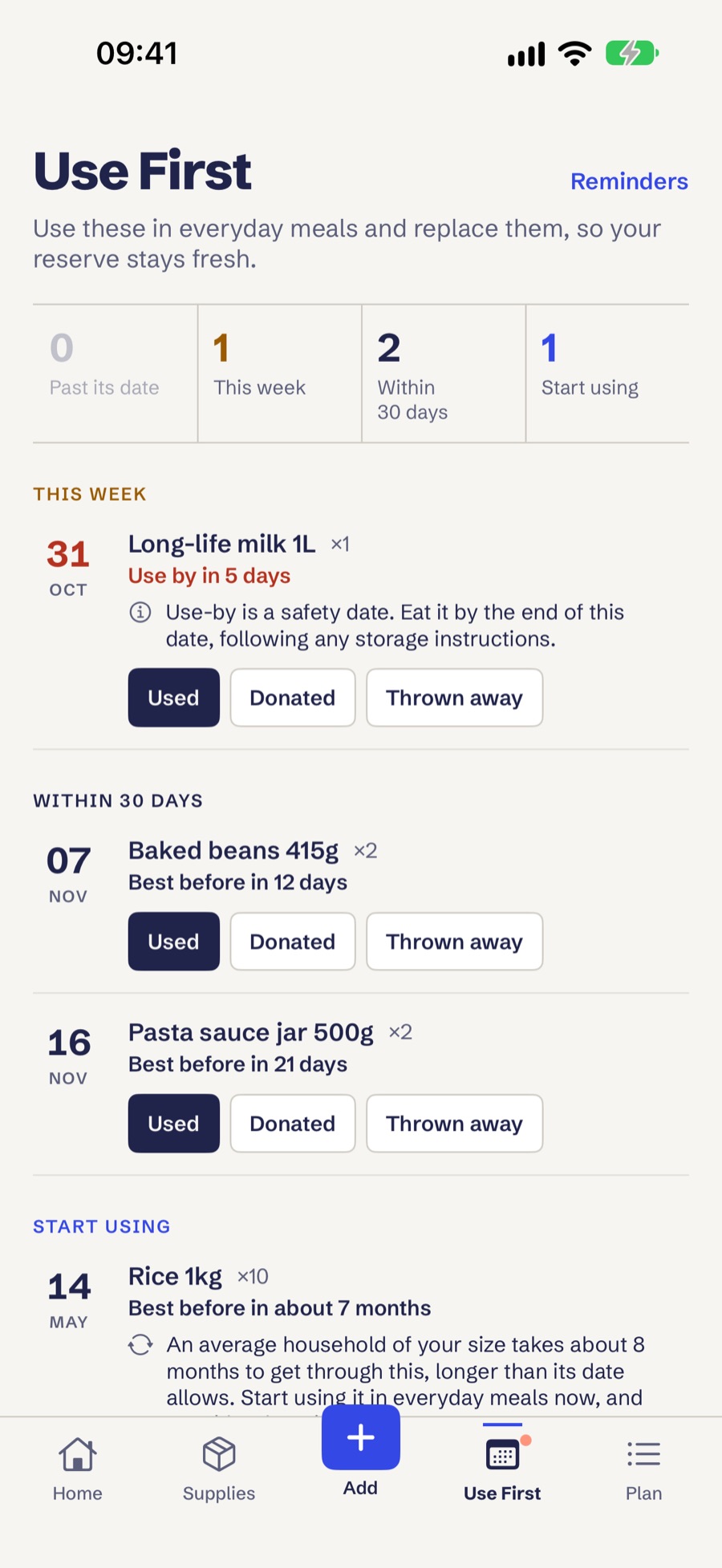
A reserve only saves money if it gets eaten. Use the oldest food in everyday meals and replace it with new food at the back. Never use food past its use-by date; best-before dates are about quality, use-by dates are about safety.
This is the part SupKit takes off your mind: it tracks every date, tells you what to use first, and adds replacements to your shopping list. See how to rotate emergency food for the full routine.
Budget
There's no need for special emergency food or expensive kits. Spread the cost over months, buy what you'd buy anyway, and avoid anything you've never eaten. Money wasted on food that ends up in the bin is the most common way a stockpile goes wrong.
Questions
Is a 3-month food supply recommended by the government?
No. Official guidance usually starts with a few days. A three-month reserve is a personal choice, and it should be built gradually from food you eat.
How do I build a food supply on a budget?
Add one or two extra long-life items you already eat to each normal shop, and use the oldest first. Over a few months it grows without a big bill or waste.
How much food is 3 months for two people?
About <strong>405,000 calories</strong> in SupKit's planning figures. The calculator works it out for other households.
Sources
- Build a Kit, Ready.gov (US Department of Homeland Security / FEMA). Checked 28 October 2026.
- Kits (2 Weeks Ready), Washington Military Department, Emergency Management Division. Checked 28 October 2026.
- Food Allergies: What You Need to Know, U.S. Food and Drug Administration. Checked 28 October 2026.
- Have Food Allergies? Read the Label, U.S. Food and Drug Administration. Checked 28 October 2026.
- Food, Ready.gov (US DHS / FEMA). Checked 28 October 2026.
- Food and Water Safety During Power Outages and Floods, U.S. Food and Drug Administration. Checked 29 October 2026.
- How to Cut Food Waste and Maintain Food Safety, U.S. Food and Drug Administration. Checked 28 October 2026.
- Low and No Cost Preparedness, Ready.gov (FEMA). Checked 29 October 2026.
- SupKit planning rules (SupScore 2026.5), SupKit. SupKit's own planning data.
We summarise official guidance in our own words. Always follow advice from your local authorities.