How to store emergency food in small spaces
No pantry? No problem. Realistic ways to keep emergency food and water in a flat or small home, safely and without blocking your way out.
Store compact, long-life food your household eats in a few cool, dry spots, such as under a bed, the top of a wardrobe or a shelf in a cool pantry, keep heavy items low, and never block exits. For two adults, a few days of food is about 13,500 calories.
Most preparedness advice seems to assume a spare room, a garage and a cellar. Plenty of people have none of those. The good news is that a few days of emergency food takes up less space than you'd think, and a small home can hold it safely with a bit of planning.
Start with a space audit
Walk round your home and look for spots that are:
- Cool and steady, away from ovens, radiators, boilers and sunny windows.
- Dry, away from damp walls, bathrooms and under-sink pipes.
- Accessible, so you can reach the food and check it easily.
- Safe, not on top of high furniture where heavy boxes could fall, and never in hallways, stairs or doorways you'd need to get out.
Places that often work
- Under the bed, in shallow, lidded boxes.
- The top or bottom of a wardrobe, for lighter items.
- A shelf in a cool pantry or the back of a kitchen pantry.
- Behind the sofa or inside a storage footstool, for cans.
- Over-door or vertical shelving in a cool room, for small packs.
Keep heavy boxes low and on strong surfaces, and think about floor loading if you're stacking a lot of cans or water in one place.
Choosing containers
Shallow, clear, stackable containers with lids make the most of awkward spaces and keep pests out. Label each one with what's inside and the earliest date. Keep food in its original packaging where possible so the date and allergens stay with it.
Compact food choices
In a small space, choose food that gives the most for the space it takes:
- Smaller cans you can finish in one go, which also helps in a power outage.
- Dense, long-life foods such as peanut butter, crackers, oats and dried fruit and nuts.
- Food that keeps without the fridge once opened, where you can.
The best foods to stockpile notes which foods need the fridge once opened and their allergens. Here's what a few days for two adults could look like:
| Item | How many |
|---|---|
| Canned chili | 7 |
| Canned soup | 8 |
| Baked beans | 7 |
| Microwave rice pouch | 4 |
| Canned tuna | 6 |
| Crackers | 1 |
| Peanut butter | 1 |
| Dried fruit and nuts | 2 |
| Granola bars | 1 |
| Canned fruit | 4 |
One way to reach 13,500 calories with long-life food. Swap in what your household eats. SupKit estimate
Water in a small home
Water is the bulky part. For two adults, three days of drinking water is 4.8 gallons (18 L). If that's hard to fit, see alternatives to storing bottled water, which explains what you can and can't safely swap.
Rotation in a small space
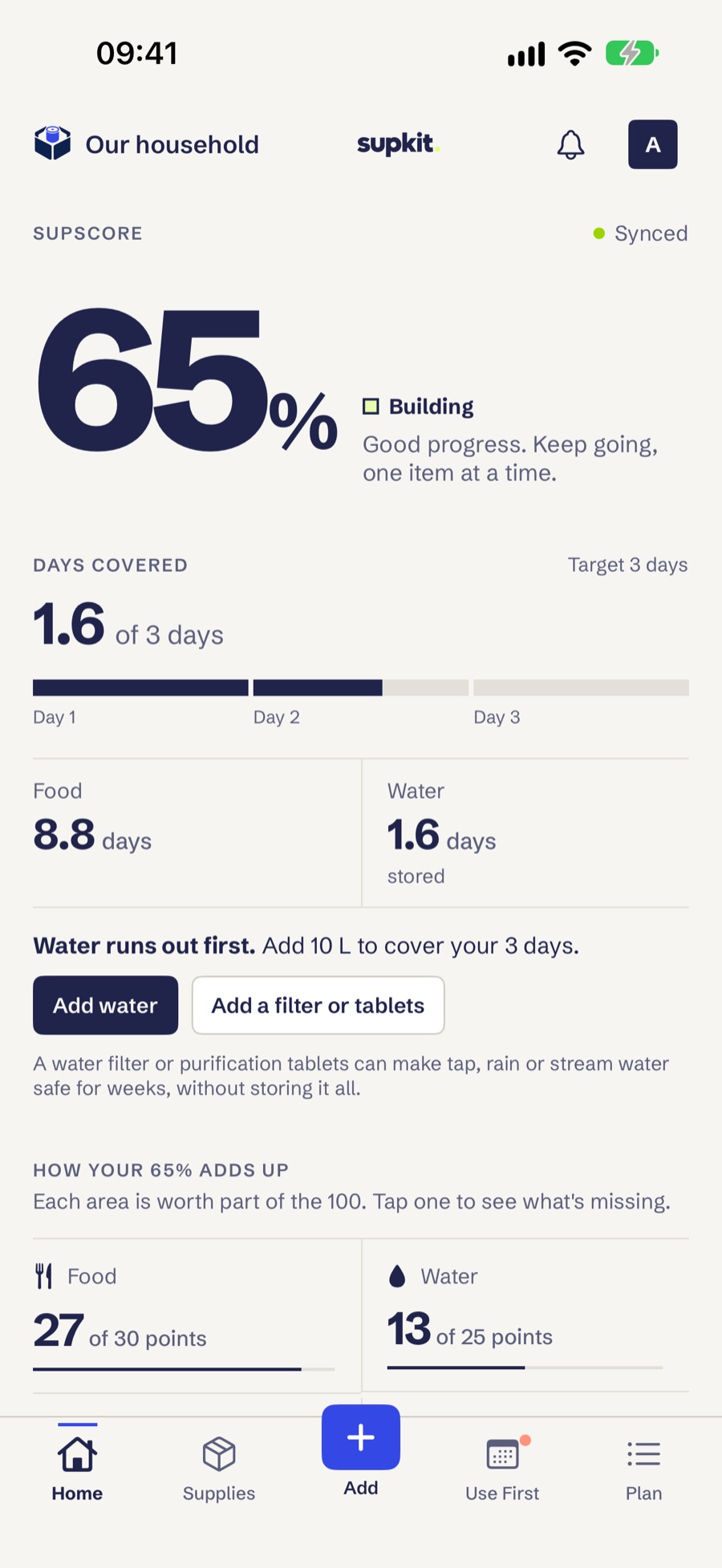
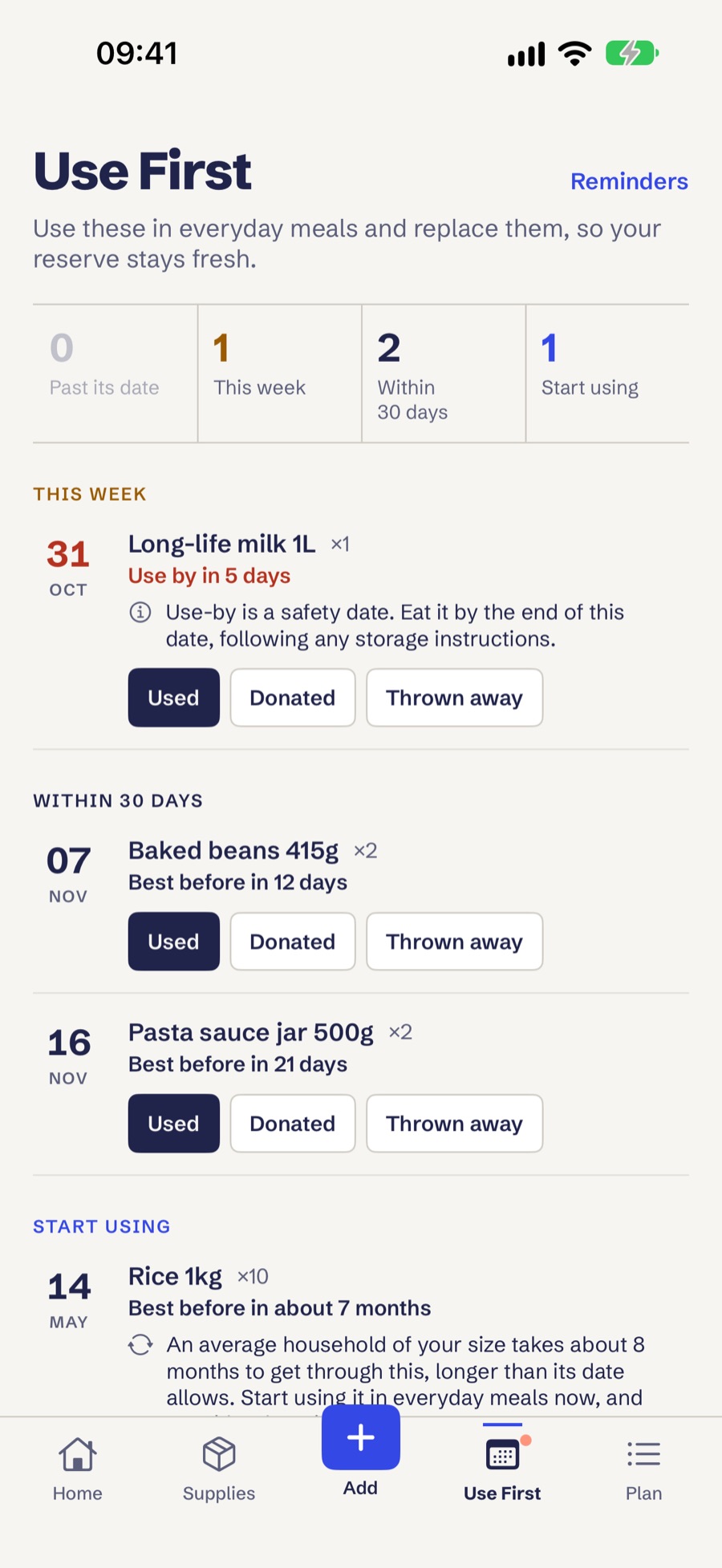
Spread-out storage is easy to forget. Keep one list of where everything is and when it's due, and check it every month or two. SupKit can hold that list, with the location of each item, and remind you before anything goes out of date.
Example layouts
- Studio flat: two shallow boxes under the bed (cans and staples), one shelf in a kitchen pantry (open-and-use items), water in a cool corner of a wardrobe.
- One-bedroom flat: a box at the bottom of a wardrobe, a storage footstool for cans, and a pantry shelf for the things you rotate most.
- Shared house: a labeled box in your room so it never gets used by mistake, and a list your household can see.
Questions
How do you store emergency food in a small flat?
Use a few cool, dry spots such as under the bed, the bottom of a wardrobe or a pantry shelf, choose compact long-life foods, keep heavy items low and never block exits.
Is it safe to store food under the bed?
Usually, if the room is cool and dry and the food is in lidded containers. Avoid rooms that get very warm or damp.
Where should I not store emergency food?
Near ovens, boilers, radiators or sunny windows, in damp places, near chemicals, or anywhere it could block a way out of your home.
Sources
- Build a Kit, Ready.gov (US Department of Homeland Security / FEMA). Checked 28 October 2026.
- Food, Ready.gov (US DHS / FEMA). Checked 28 October 2026.
- Food and Water Safety During Power Outages and Floods, U.S. Food and Drug Administration. Checked 29 October 2026.
- Water, Ready.gov (US DHS / FEMA). Checked 28 October 2026.
- How to Create an Emergency Water Supply, Centers for Disease Control and Prevention. Checked 29 October 2026.
- SupKit planning rules (SupScore 2026.5), SupKit. SupKit's own planning data.
We summarise official guidance in our own words. Always follow advice from your local authorities.