The best foods to stockpile for an emergency
Everyday long-life foods worth having on hand, grouped by type, with why each is useful and what to check: allergens, diets and storage once opened.
The best foods to stockpile are long-life foods your household already eats: tins of fish, beans and fruit, peanut butter, crackers, cereal bars, long-life milk, rice and pasta. Check allergens and diets first, and favour foods that don't need the fridge once opened.
There's no single best emergency food. The best food for your household is long-life food that everyone will eat, that suits their diets, and that keeps without a fridge. This list is built from SupKit's product catalogue, the same one the app uses, with what we know about each food's allergens and diets. It isn't a ranking, and no food suits every home.
How we chose these foods
Every food here:
- Keeps without a fridge until it's opened.
- Is easy to find in an ordinary shop, not a specialist supplier.
- Is something people already eat, so it gets used and replaced rather than forgotten.
- Adds something: energy, protein, fruit, or simply comfort.
Some foods need the fridge once opened, which matters in a power cut. Some contain common allergens. We note both, but recipes vary between brands, so always read the label of the product you buy.
The list
Meals in a tin or pouch
| Food | Why it's useful | Check |
|---|---|---|
| Tinned soup | about 753 kJ (180 Cal) a pack; vegetarian | Allergens vary by recipe |
| Tinned chilli | about 1,674 kJ (400 Cal) a pack | Allergens vary by recipe |
| Ready meal pouch | about 1,255 kJ (300 Cal) a pack | Allergens vary by recipe |
Protein and sides
| Food | Why it's useful | Check |
|---|---|---|
| Baked beans | about 1,318 kJ (315 Cal) a pack; vegan | Read the label |
| Tinned tuna | about 502 kJ (120 Cal) a pack | Contains fish |
| Tinned chickpeas | about 1,172 kJ (280 Cal) a pack; vegan, gluten free | Read the label |
| Tinned tomatoes | about 335 kJ (80 Cal) a pack; vegan, gluten free | Read the label |
| Pasta sauce in jars | about 1,046 kJ (250 Cal) a pack; vegan | Allergens vary by recipe; needs the fridge once opened |
| Peanut butter | about 8,368 kJ (2,000 Cal) a pack; vegan, gluten free | Contains peanuts |
Staples
| Food | Why it's useful | Check |
|---|---|---|
| Dried pasta | about 7,322 kJ (1,750 Cal) a pack; vegan | Contains cereals containing gluten |
| White rice | about 14,644 kJ (3,500 Cal) a pack; vegan, gluten free | Read the label |
| Microwave rice pouch | about 1,548 kJ (370 Cal) a pack; vegan | Read the label |
| Porridge oats | about 15,690 kJ (3,750 Cal) a pack; vegan | Contains cereals containing gluten |
Snacks and fruit
| Food | Why it's useful | Check |
|---|---|---|
| Tinned fruit | about 837 kJ (200 Cal) a pack; vegan, gluten free | Read the label |
| Rice pudding | about 1,506 kJ (360 Cal) a pack; vegetarian, gluten free | Contains milk |
| Crackers | about 5,648 kJ (1,350 Cal) a pack; vegan | Contains cereals containing gluten |
| Cereal bars | about 3,012 kJ (720 Cal) a pack; vegetarian | Allergens vary by recipe |
| Dried fruit and nuts | about 3,766 kJ (900 Cal) a pack; vegan, gluten free | Contains tree nuts; choking risk for under-5s |
Drinks
| Food | Why it's useful | Check |
|---|---|---|
| Long-life milk | about 1,925 kJ (460 Cal) a pack; vegetarian, gluten free | Contains milk; needs the fridge once opened |
Energy per pack is SupKit's catalogue estimate. Allergens and diets describe the main ingredient, so always read the label. SupKit estimate
Each linked food has its own guide covering how much to store, what the date on its label means, and allergens to check.
Special diets
If anyone at home has an allergy, intolerance or medical diet, plan around them first and keep their food separate so it's never used by mistake. Check every label, including "may contain" warnings, each time you buy, because recipes change.
Babies and young children
Babies need their usual milk or formula and feeding supplies; don't swap to something new in an emergency. Young children do best with food they know. Some foods, such as whole nuts, are a choking risk for young children.
Building a balanced shelf
Aim for a mix rather than a lot of one thing:
- Staples for energy.
- Protein such as tinned fish, beans, pulses and peanut butter.
- Fruit and vegetables, tinned or dried.
- Drinks such as long-life milk.
- Treats. A bar of chocolate or a favourite snack does a lot for morale in a hard few days.
Our food quantities guide turns your household into a target, and the food quantity calculator turns any food on this list into a number of packs.
Storage and dates
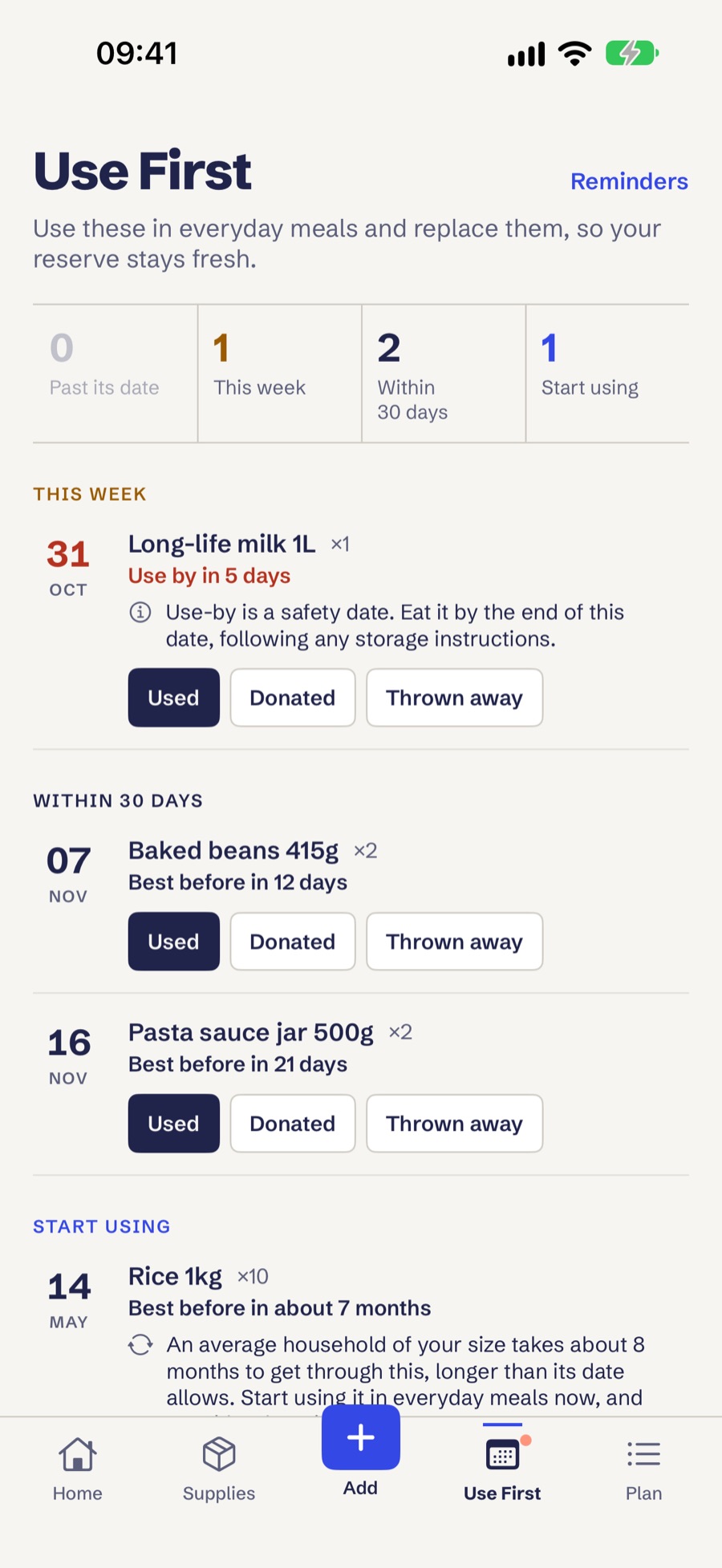
Store these foods somewhere cool, dry and dark, and use the oldest first. Best-before dates are about quality; use-by dates are about safety.
Your shopping checklist
- A manual tin opener, if you don't have one.
- Two or three staples your household likes.
- Two or three kinds of protein.
- Tinned or dried fruit and vegetables.
- Long-life milk or a suitable alternative.
- Snacks and a treat or two.
- Anything specific to babies, special diets or medical needs.
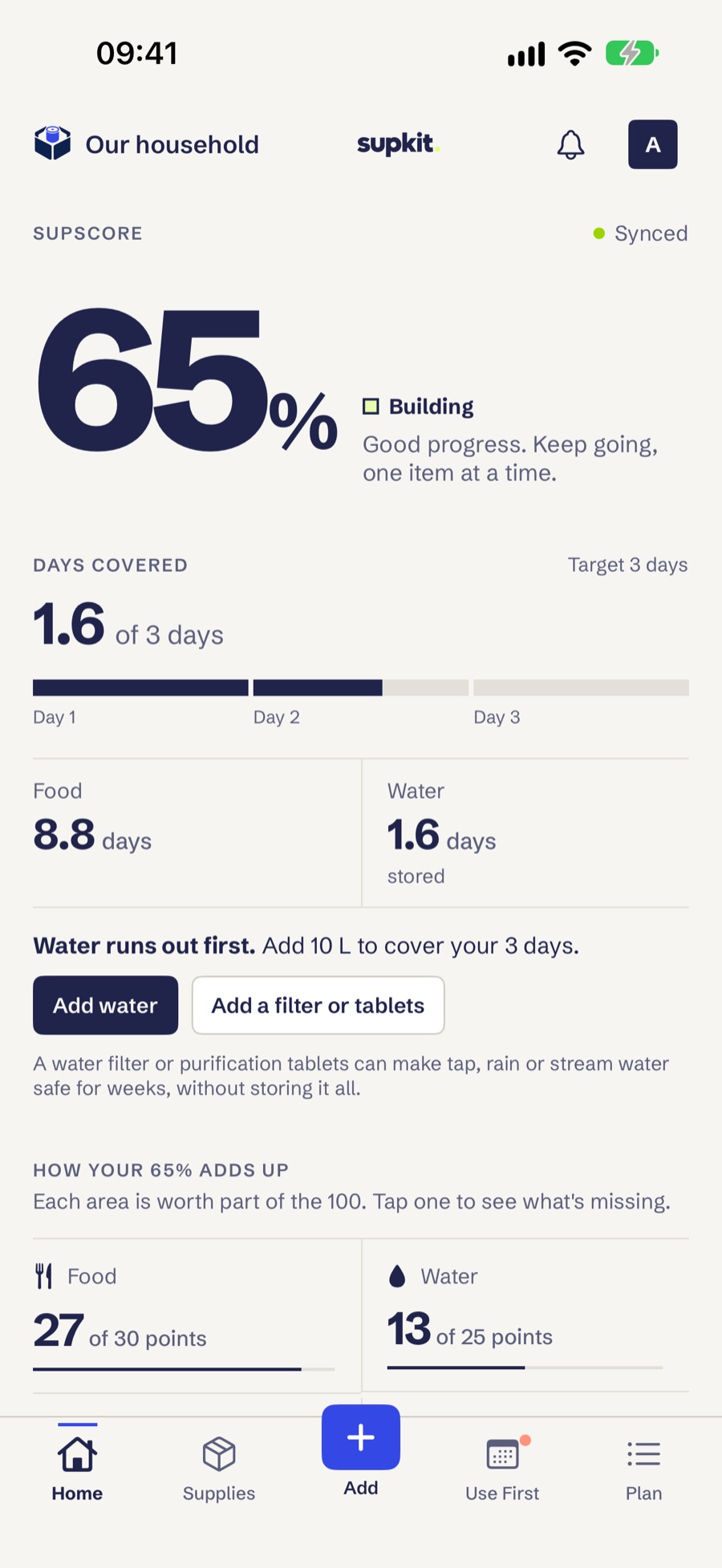
SupKit keeps track of what you've bought and when each item is due, so the shelf stays useful rather than forgotten.
Questions
What is the best food to stockpile?
Long-life food your household already eats and that suits everyone's diets: tinned fish, beans and fruit, peanut butter, crackers, long-life milk, rice and pasta are common choices.
Which emergency foods don't need a fridge once opened?
Many tins, crackers, cereal bars and dried fruit and nuts don't. Pasta sauce and long-life milk do once opened, which matters in a power cut. Check each label.
Should I check allergens on emergency food?
Yes, every time you buy. Recipes change, and "may contain" warnings matter for anyone with an allergy.
Sources
- Allergen labelling for consumers, Food Standards Australia New Zealand. Checked 28 October 2026.
- Botulism, Health New Zealand | Te Whatu Ora. Checked 28 October 2026.
- Use-by and best-before dates, Food Standards Australia New Zealand. Checked 28 October 2026.
- SupKit product catalogue (typical nutrition estimates), SupKit. SupKit's own planning data.
We summarise official guidance in our own words. Always follow advice from your local authorities.