How to rotate emergency food without wasting it
A simple use-and-replace routine for your emergency food: tracking dates, organising shelves, using the oldest first and replacing it, so nothing goes in the bin.
Put new food at the back and older food at the front, check dates regularly, use anything nearing its date in everyday meals, and replace it on your next shop. Use-by dates are about safety and always come first; best-before dates are about quality.
It's frustrating to clear out a cupboard and find the food you bought for emergencies has quietly gone out of date. Rotation fixes that. It means eating your reserve as part of normal meals and replacing it as you go, so your store stays fresh and nothing is wasted.
Why emergency food gets wasted
Emergency food tends to go to the back of the cupboard and stay there. Nobody remembers what's in it or when it's due, so it only gets looked at when it's already too late. The fix isn't more discipline; it's a routine that makes the right thing easy.
Track the dates
You can't rotate what you can't see. Know what you have and when each item is due. Most importantly, know which kind of date it is:
A first-in, first-out routine never overrides a use-by date. If something is past its use-by date, it goes, whatever order it's in.
Organise your shelves
- New food goes at the back; older food comes forward.
- Group food by type so you can see gaps.
- Keep the next item to use where you'll see it.
- Keep special diets and baby food separate and clearly labelled.
Find the "use first" items
Every week or two, look for anything that will be due within the next month. Those are your use-first items. Move them to the kitchen and plan them into meals.
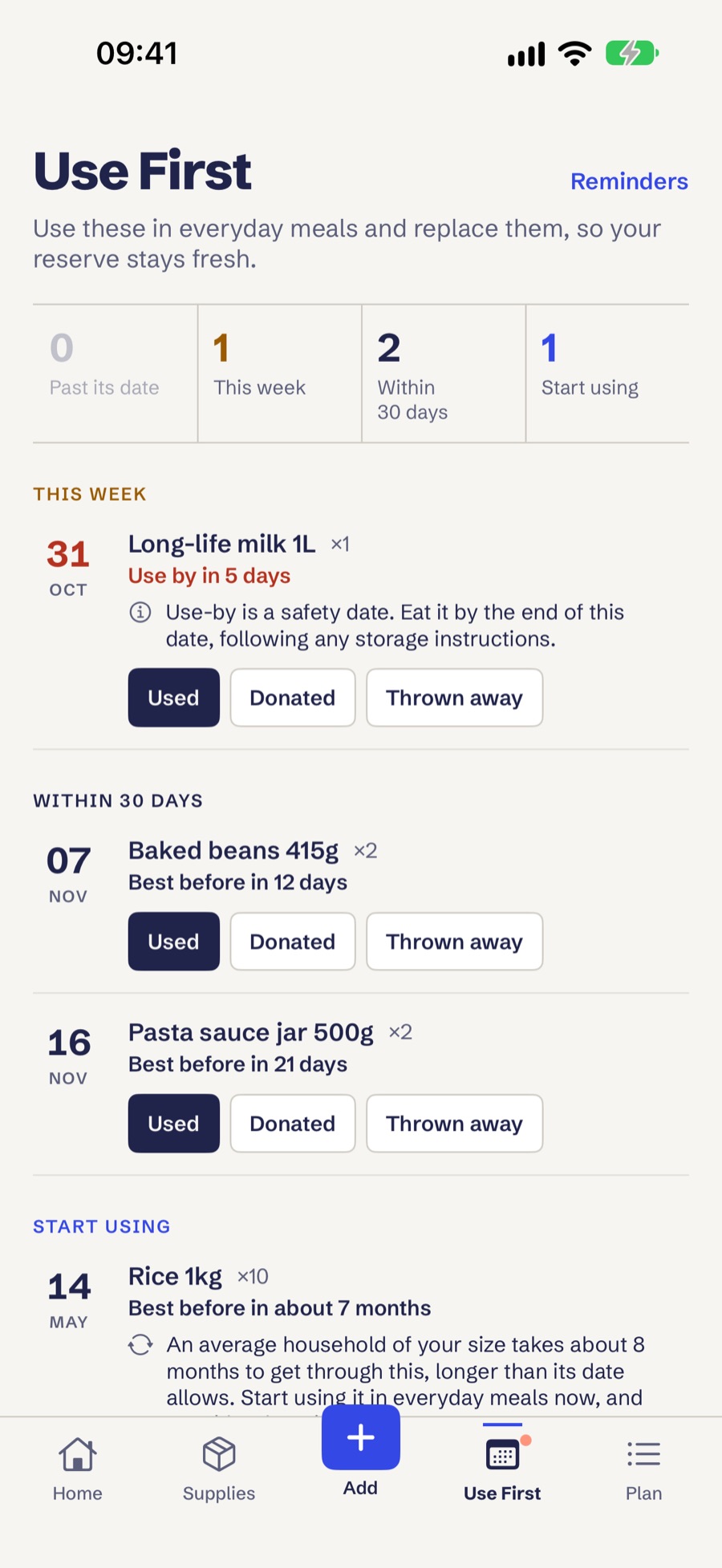
This is exactly what SupKit's Use First list does: it looks at everything you have, works out how quickly your household normally gets through it, and tells you what to start using before it's too late, early enough that you can eat it at your normal pace.
Use it in everyday meals
Eat use-first items as part of your normal week. A tin of beans or fish, some crackers, a jar of peanut butter: none of it needs to feel like emergency food.
Replace it
Add whatever you've used to your next shopping list, and put the new one at the back. Your store stays the same size and gets a little fresher every week.
A ten-minute monthly routine
- Look along each shelf and bring anything due in the next month to the front.
- Take one or two use-first items into the kitchen for this week's meals.
- Check for damaged packaging, swollen or rusty tins, and signs of pests.
- Write the replacements on your shopping list.
- Put the new items at the back when you unpack.
Rotating more than food
The same idea works for the rest of your kit:
- Water: use or replace bottled water before its date, and refresh water you've stored yourself regularly.
- Batteries: check them and use the oldest first in everyday things.
- Medicines and first aid supplies: check dates every few months and replace anything out of date.
- Baby food and formula: rotate as babies grow, because what they need changes quickly.
- Pet food: use and replace it like your own.
Automate the reminders
A paper list works if you keep it up to date, which is where most lists fail. SupKit keeps the list for everyone at home, watches every date, tells you what to use first and adds replacements to your shopping list as you use things, so the routine runs without you having to remember it.
Questions
What is food rotation?
Using the oldest food in your store first, in everyday meals, and replacing it with new food at the back, so your emergency food stays fresh and nothing is wasted.
Does first in, first out override use-by dates?
No. Never eat food past its use-by date, whatever order it's in. Best-before dates are about quality; use-by dates are about safety.
How often should I check my emergency food?
Every month or two is a good habit, plus after any time you've used your supplies. SupKit can remind you automatically.
Sources
- Use-by and best-before dates, Food Standards Australia New Zealand. Checked 28 October 2026.
- Food safety in an emergency, Food Standards Australia New Zealand. Checked 29 October 2026.
- Floods and food safety, Food Standards Australia New Zealand. Checked 29 October 2026.
- Home emergency checklist, Govt.nz (citing NEMA). Checked 28 October 2026.
- Have emergency supplies (Consistent Messages for CDEM), National Emergency Management Agency. Checked 29 October 2026.
We summarise official guidance in our own words. Always follow advice from your local authorities.