Emergency food storage for beginners: where to start
You don't need a bunker. Start with your next grocery store shop: a simple first week of steps to get your household's emergency food sorted.
Start with what's already in your pantry, aim for a few days of food and water for everyone at home, and add a little to your next few shops. For two adults, 3 days is about 13,500 calories of food and 18 L of drinking water.
Being prepared doesn't mean a basement full of supplies or a weekend of panic buying. For most homes it means having enough food, water and a few essentials to get through a power outage, a storm or a few days of being unwell, without a dash to the shops. You can get there with a few small steps, starting with your next grocery store shop.
What being prepared actually means
It means that if the shops were shut, the power went off or the water stopped for a few days, your household could manage calmly. That's all. Official guidance in Canada puts it like this:
Day 1: check the pantry
Before buying anything, look at what you already have. Most homes are further along than they think: cans, pasta, rice, cereal, crackers, jars. Check the dates as you go and move anything close to its date to the front to use this week.
Make a quick note of what you found. It's the start of your list.
Day 2: choose a target
Start with a few days for everyone at home. Here's what that means for some common households:
| Household | 3 days | 7 days | 14 days |
|---|---|---|---|
| One adult | 6,750 calories | 15,750 calories | 31,500 calories |
| Two adults | 13,500 calories | 31,500 calories | 63,000 calories |
| Two adults and two children | 23,100 calories | 53,900 calories | 107,800 calories |
| Two adults, a teenager and two children | 30,300 calories | 70,700 calories | 141,400 calories |
Food energy at SupKit's planning figures by age. SupKit estimate
That's enough to aim for. A week or two can come later, once the first few days are covered and the habit is in place.
Days 3 to 5: buy the essentials
Add a few long-life items to your normal shop rather than doing a special trip. Choose food your household already eats:
- Two or three staples, such as rice, pasta, oats or crackers.
- Some protein, such as canned fish, beans or peanut butter.
- Canned or dried fruit.
- Shelf-stable milk or an alternative.
- A treat or two.
- A manual can opener, if you don't have one.
- Drinking water: 18 L for two adults for three days.
Plan around allergies, special diets and babies from the start; don't leave them for later.
Day 6: store it
Find a cool, dry, dark place away from heat, damp and pests. Put the newest food at the back and the oldest at the front.
Day 7: track it
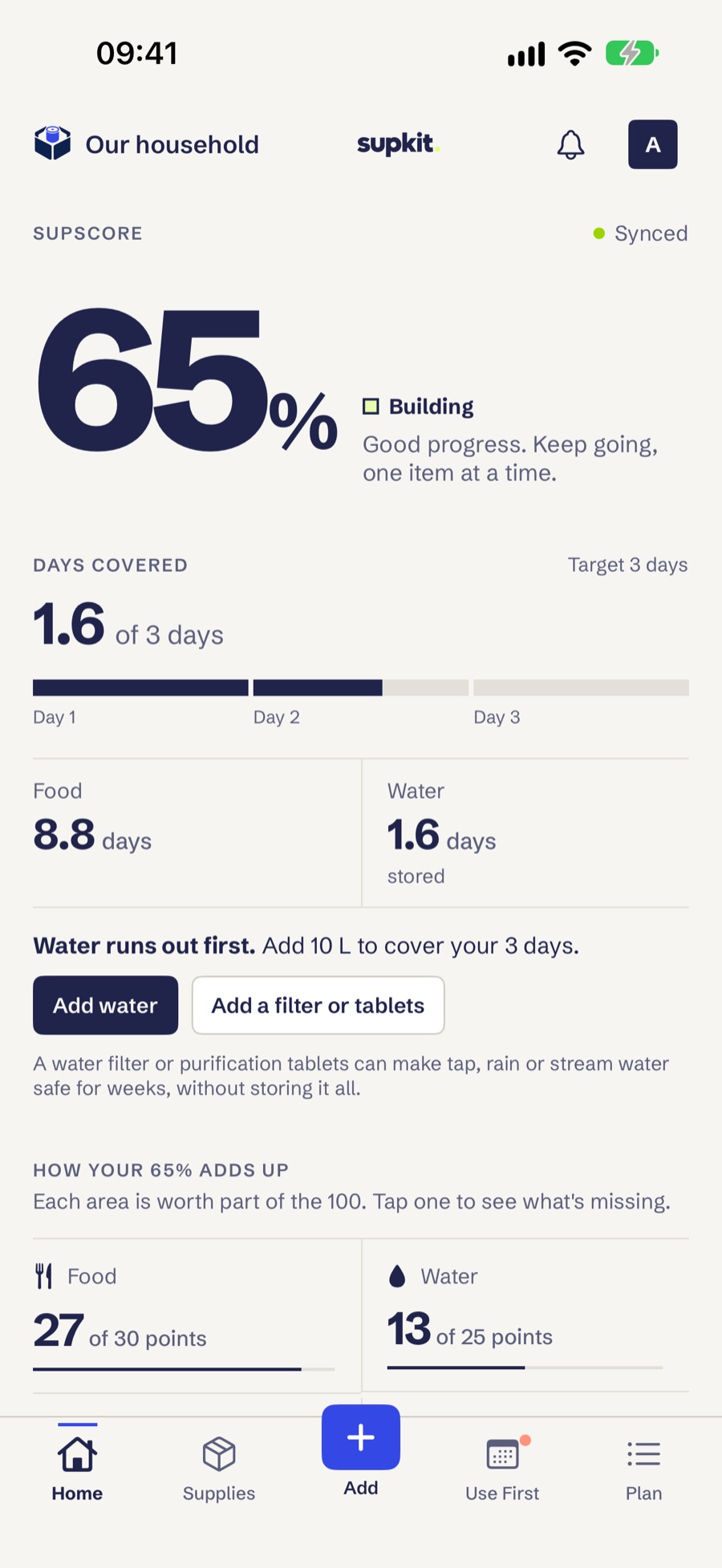
Write down what you've stored and when each item is due, or let SupKit do it: scan the barcode and it keeps the list and the dates for you, and reminds you before anything goes out of date.
Then: keep it going
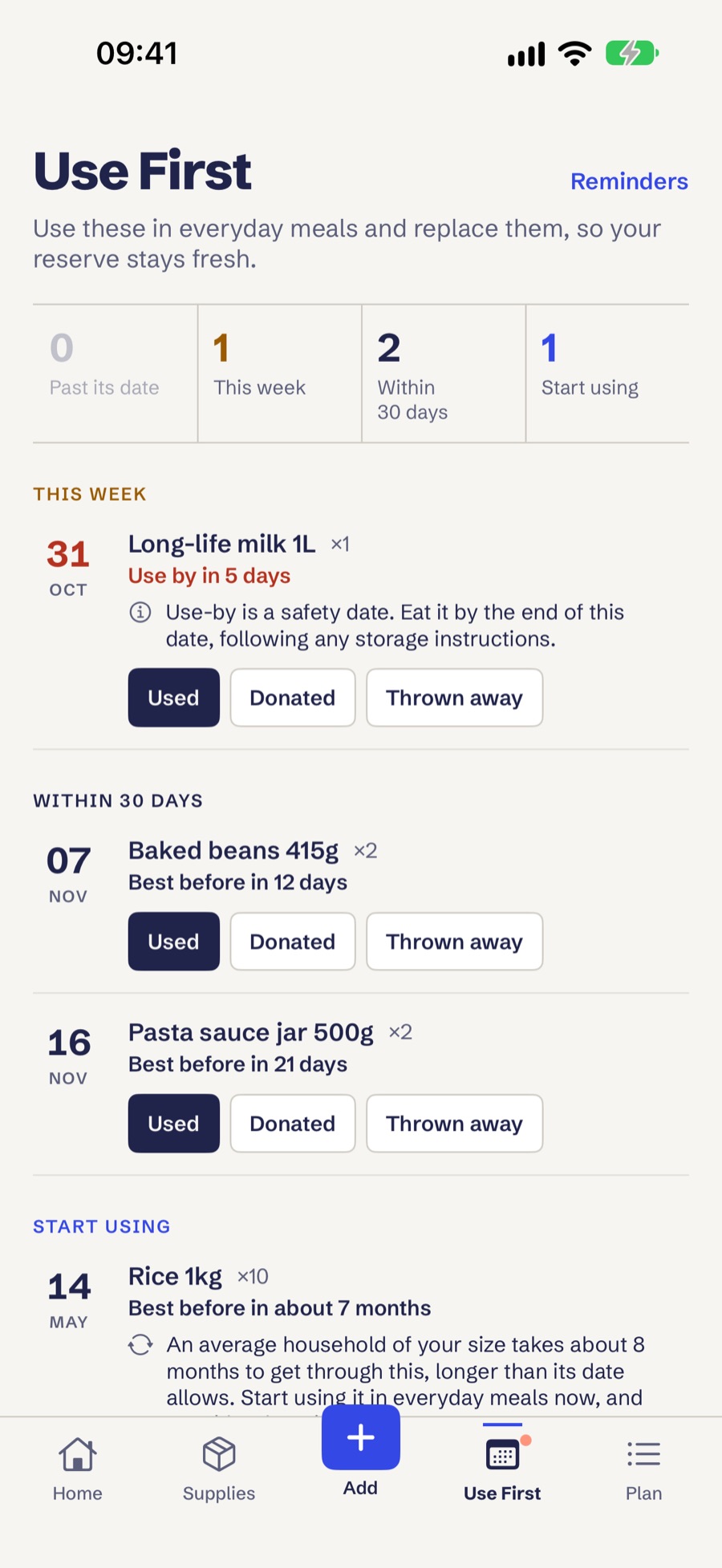
The real trick is keeping it going without thinking about it. Use the oldest food in normal meals, replace it on your next shop, and check your store every month or two. The rotation guide has a simple routine, and the 72-hour kit checklist covers everything beyond food.
Questions
How do I start an emergency food supply?
Check what you already have, aim for a few days of food and water for everyone at home, and add a few long-life items you already eat to your next shops. Store them somewhere cool and dry, and use the oldest first.
Do I need to buy special emergency food?
No. Everyday long-life food your household already eats is the best choice, because it gets eaten and replaced rather than forgotten.
How much should I store to start with?
A few days for everyone at home is the usual first goal. For two adults, that's about <strong>13,500 calories</strong> of food and <strong>18 L</strong> of drinking water.
Sources
- Emergency kits - Canada.ca, Government of Canada (Public Safety Canada). Checked 27 October 2026.
- Food allergies, Health Canada. Checked 28 October 2026.
- Before you shop: food allergies and allergen labelling, Canadian Food Inspection Agency. Checked 28 October 2026.
- Food and drinking water safety in an emergency, Health Canada. Checked 29 October 2026.
- Emergency kit checklist, Government of Canada (Get Prepared). Checked 29 October 2026.
- SupKit planning rules (SupScore 2026.5), SupKit. SupKit's own planning data.
We summarise official guidance in our own words. Always follow advice from your local authorities.