How long does canned food really last?
What the date on a can means, what affects how long it keeps, how to spot a can that isn't safe, and how to rotate cans so none go to waste.
Cans usually carry a best-before date, which is about quality rather than safety, so a can in good condition can often still be eaten after it. Never eat from a can that is bulging, leaking, badly dented or rusty, and always follow a use-by date.
Cans are the backbone of most emergency food stores, and for good reason: they're sturdy, they don't need a fridge, and they keep for a long time. But "a long time" isn't forever, and the date on the label doesn't always mean what people think. Here's how to judge a can safely.
What the date on a can means
There are two kinds of date on food, and they mean different things:
- Best before is about quality. After it, food may not be at its best, but it isn't necessarily unsafe if it has been stored properly and the packaging is undamaged.
- Use by is about safety. Food shouldn't be eaten after its use-by date, even if it looks and smells fine.
Most cans carry a best-before date. Here's what official guidance in Canada says:
What affects how long a can keeps
- Temperature. Heat speeds up changes in flavor, texture and color. A cool, steady spot is best.
- Moisture. Damp causes rust, and rust can damage the seal.
- The food inside. Different foods change at different rates, which is why dates vary between cans.
- Handling. Dropped or crushed cans can be damaged in ways that let bacteria in.
Storage conditions
Keep cans somewhere cool, dry and dark, off the floor, and away from ovens, boilers, radiators and direct sun. Avoid places that freeze or get very hot, such as some garages and lofts.
Warning signs: when to throw a can away
Don't eat food from a can that is:
- Bulging or swollen, or with a lid that bounces back when pressed.
- Leaking, or with stains or residue on the outside.
- Badly dented, especially along the seams or rim.
- Deeply rusted, rather than just marked on the surface.
- Spurting liquid or giving off a bad smell when opened.
If in doubt, throw it out. It isn't worth the risk, especially for children, older people, pregnant women or anyone who is unwell.
Once a can is opened
An opened can is no longer long-life food. Transfer any leftovers into a clean, covered container, put them in the fridge, and use them within the time the label gives. In a power outage, that's a reason to stock smaller cans you can finish in one go.
A five-minute can check
Every month or two, take a quick look along your cans:
- Check each date and bring anything due soon to the front.
- Run your eye along the seams and rims for dents, rust or stickiness.
- Press the lids: they shouldn't move or bulge.
- Move any damaged cans out and throw them away safely.
- Make a note of what you need to replace.
Choosing cans to stock
Pick cans your household already eats, in sizes you can finish in one go. Ring-pull cans are handy in an emergency, but keep a manual can opener anyway. Check allergens on every label, and look for options that suit special diets, such as lower-salt or no-added-sugar versions where that matters to someone at home.
A simple rotation guide
- Put new cans at the back and move older ones forward.
- Check dates every month or two.
- Use anything nearing its date in normal meals.
- Replace what you use on your next shop.
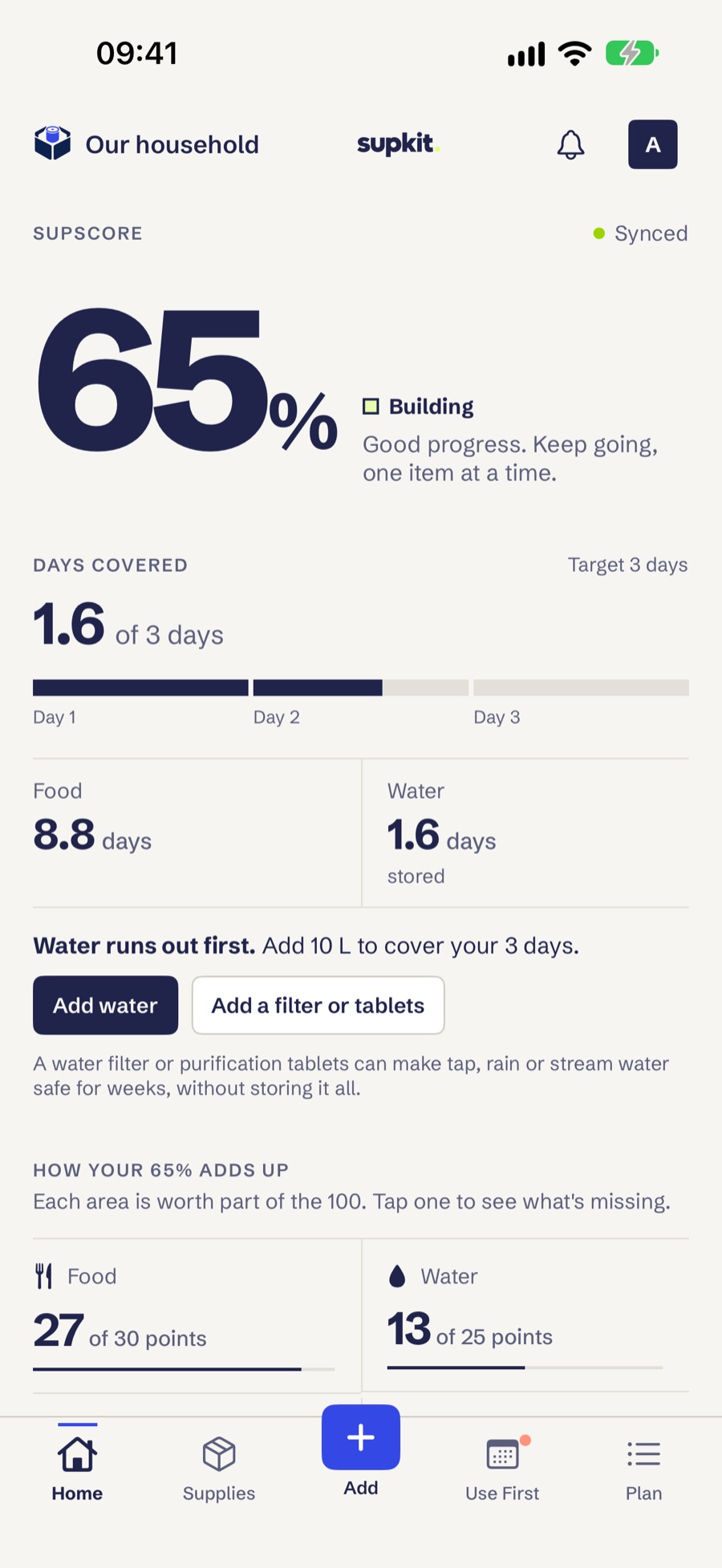
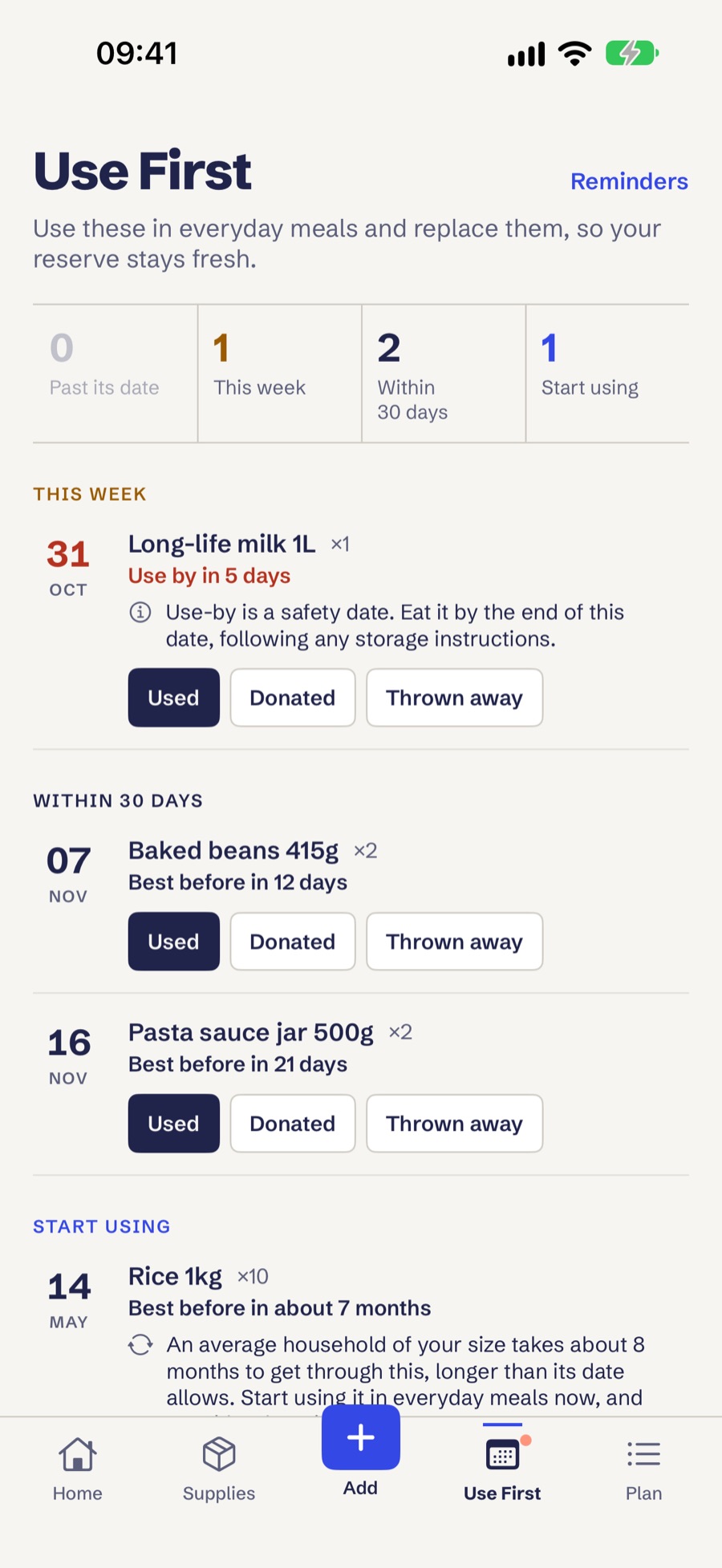
SupKit does this for you: it reads the date when you add a can, tells you what to use first, and reminds you before anything is due. See how to rotate emergency food for the full routine.
Questions
Can you eat canned food after the best-before date?
Best-before dates are about quality, not safety, so a can that's been stored well and is undamaged may still be fine. Never eat food past a use-by date, and throw away any can that is bulging, leaking, badly dented or rusty.
How long does canned food last?
It depends on the food and how it's stored. Cans usually keep for a long time when stored cool and dry, but follow the date on the label and check the can's condition.
What does a bulging can mean?
It can be a sign the food has spoiled. Don't open or taste it; throw it away.
Sources
- Best before, expiration and more: Understanding the date labels on your food, Canadian Food Inspection Agency. Checked 28 October 2026.
- Food and drinking water safety in an emergency, Health Canada. Checked 29 October 2026.
We summarise official guidance in our own words. Always follow advice from your local authorities.