What to do during a 72-hour power outage
If the power went off tonight, what would you do first? A calm timeline for the first 15 minutes, the first few hours and the first three days.
Check whether it's just your home, switch to flashlights rather than candles, keep the fridge and freezer closed, check on anyone vulnerable, and keep a radio and charged power bank for updates. Never use a generator, barbecue or outdoor heater indoors.
Most power outages are short. Some aren't. A storm, a flood or a fault on the network can leave homes without electricity for a day or more, and the first few minutes set the tone. Here's a calm, practical timeline, with what official guidance in Canada recommends at each step.
The first 15 minutes
- Check whether it's just you. Look at your fuse box or consumer unit. If the neighbours' lights are off too, it's likely a wider power outage.
- Get light safely. Use flashlights, not candles, to reduce the risk of fire.
- Report it and check for updates with your electricity network or supplier, using a charged phone or a battery radio.
- Switch off appliances that could come back on unattended, such as ovens, irons and heaters, and leave one light on so you know when power returns.
The first few hours
- Keep the fridge and freezer closed. They stay cold for longer if you don't open them.
- Check on others. Older neighbours, people living alone and anyone who relies on powered medical equipment may need help.
- Save your phone battery. Lower the brightness, close apps and use a power bank.
- Keep warm or cool. Close curtains and doors to keep heat in during winter, or out in summer.
Food and fridges
A full freezer keeps food frozen for longer than a half-empty one, and a closed fridge stays cold for some hours. Eat food from the fridge first, then the freezer, then your long-life store. If food has been warm for too long, or you're unsure, throw it away.
Long-life food that doesn't need the fridge once opened is the most useful kind in a power outage. The best foods to stockpile notes which ones those are.
Heat and lighting
Flashlights and battery lanterns are the safest light. In cold weather, gather in one room, close doors and curtains, layer clothes and use blankets. Never use a gas or charcoal barbecue, a patio heater or a generator indoors: they produce carbon monoxide, which can kill.
Solar panels and home batteries don't always keep working in a power outage; many systems switch off for safety unless they're set up to supply the home on their own. Check how yours works before you rely on it.
Communications
Cell networks may slow down or stop working in a long power outage, so keep a battery or wind-up radio and spare batteries. Write important phone numbers on paper. Agree in advance how your household will contact each other and where you'll meet.
From 24 to 72 hours
- Keep checking official updates on the radio.
- Use your stored water and long-life food; for two adults, three days is 18 L of drinking water and about 13,500 calories of food.
- Keep checking on neighbours and anyone vulnerable.
- If anyone relies on powered medical equipment or medicine that needs a fridge, follow the plan you agreed with their doctor, pharmacist or equipment supplier, and contact the emergency services if their health is at risk.
When the power comes back
Switch appliances back on one at a time. Check the fridge and freezer and throw away anything that's no longer safe. Restock your flashlights, batteries and power banks, replace any food and water you used, and think about what you'd do differently next time.
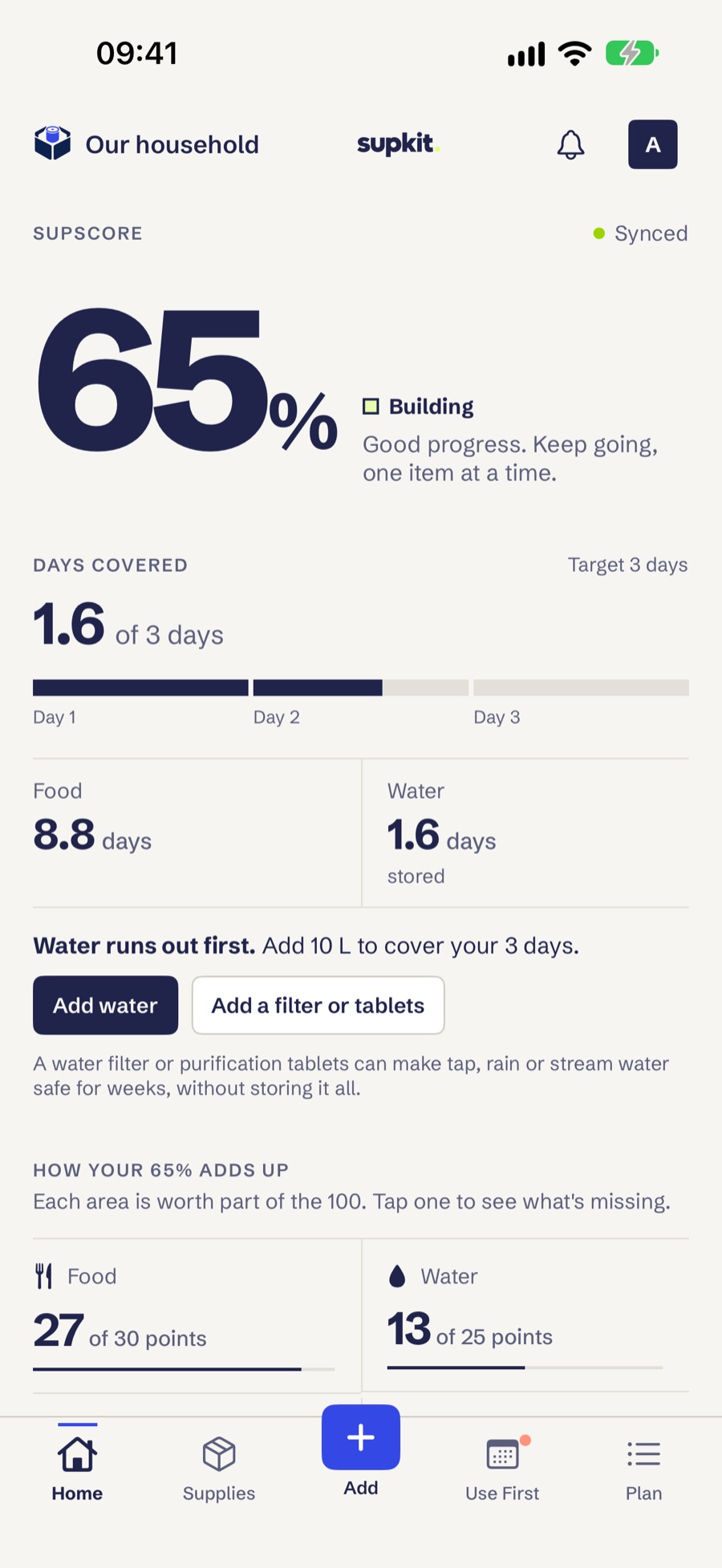
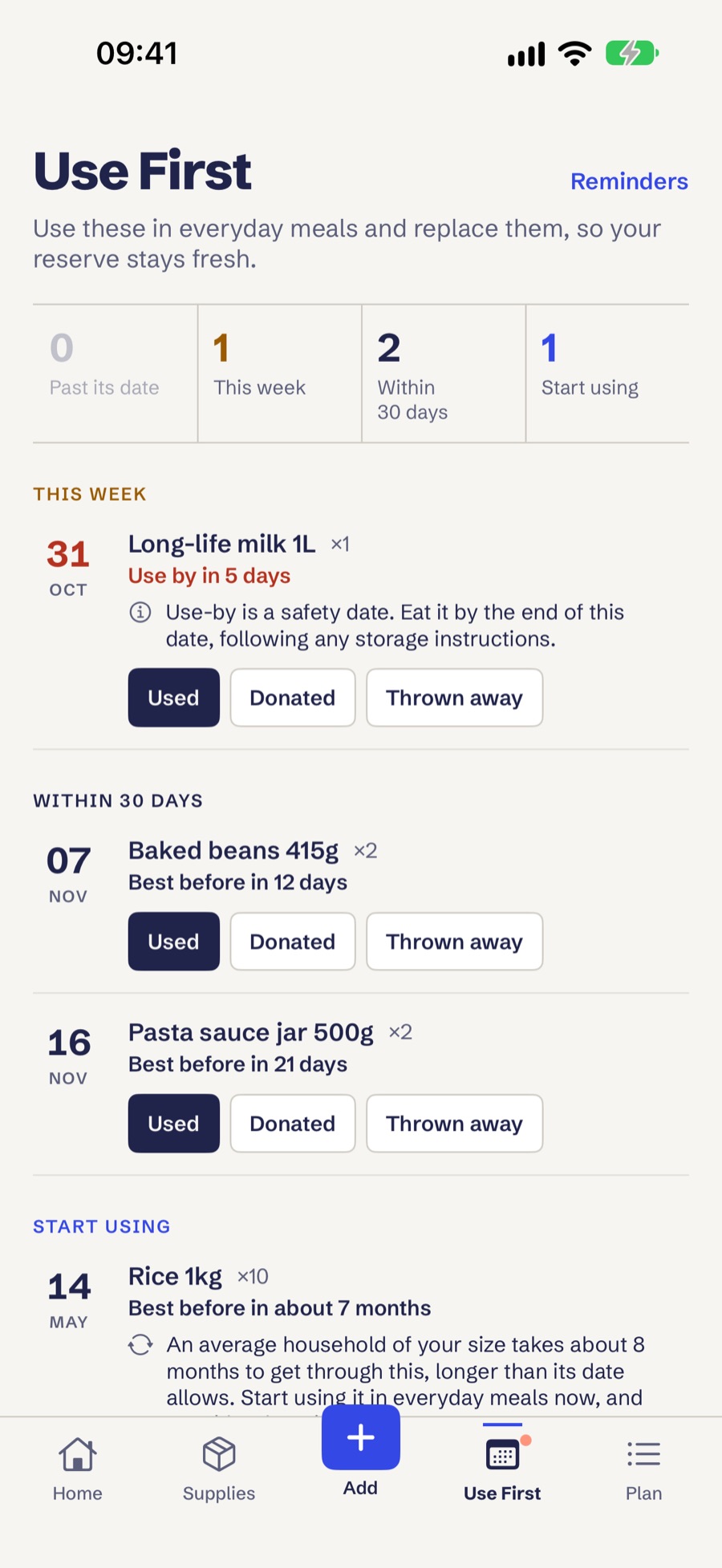
SupKit keeps your emergency plan, contacts and supplies on your phone, so they're there even without power or signal.
Questions
What should I do first in a power outage?
Check whether it's just your home, use flashlights rather than candles, switch off appliances that could come back on unattended, and check for updates with your electricity network or on a battery radio.
How long will food last in the fridge during a power outage?
A closed fridge stays cold for some hours, and a full freezer keeps food frozen longer. Keep both closed, and throw away anything you're unsure about.
Can I use a generator indoors?
No. Generators, barbecues and outdoor heaters produce carbon monoxide, which can kill. Only use them outdoors, well away from doors, windows and vents.
Sources
- Power outages - Get prepared, Government of Canada (Public Safety Canada). Checked 28 October 2026.
- Food and drinking water safety in an emergency, Health Canada. Checked 29 October 2026.
- Alert Ready, Pelmorex Corp. with federal, provincial and territorial emergency management partners. Checked 28 October 2026.
- SupKit planning rules (SupScore 2026.5), SupKit. SupKit's own planning data.
We summarise official guidance in our own words. Always follow advice from your local authorities.